 Fellow Canadians: All inFlow plans are available in Canadian dollars



Key takeaways
- Construction project management is the process of planning, scheduling, budgeting, and controlling a build from start to finish so it meets its requirements, finishes on schedule, and stays within budget.
- The five phases of a construction project are initiation, planning (which includes pre-construction and procurement), execution, monitoring and control, and closeout.
- Labor shortages are the most common cause of construction project delays in 2026. In AGC’s 2026 Workforce Survey, 42% of contractors said worker shortages delayed projects, and 74% had at least one significant delay in the past year.
- A construction budget should typically carry a contingency of 5% to 10% of construction costs, with more set aside for renovations or projects with incomplete designs.
- The costliest construction project management mistakes are underestimating costs, poor scheduling, hiring on price alone, letting scope changes go undocumented, and losing track of materials.
- Most construction businesses still track materials manually. In inFlow’s 2026 survey of 108 construction and trades operators, 86% used spreadsheets, 35% used pen and paper, and 81% had no dedicated inventory software.
- Construction project managers typically combine project management and scheduling software with estimating, job costing, and inventory or asset tracking tools, rather than relying on a single platform.
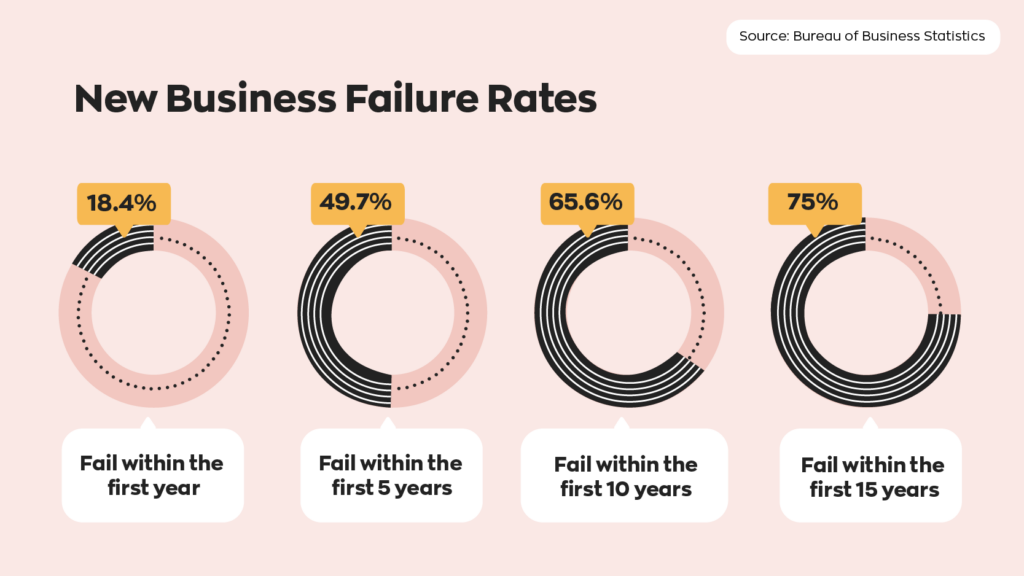
No matter what industry you’re in, starting a business can be somewhat of a gamble. So much so that data from the Bureau of Labor Statistics (BLS) shows only about 25% of new businesses make it past fifteen years. And construction is one of the riskier bets, consistently ranking among the industries with the lowest survival rates.
Part of the reason maintaining a business is so tricky is that businesses comprise many different parts. Even within a single branch, workers have different specializations, which means they’ll have different needs. Construction takes that to the extreme, since every job pulls together different trades, suppliers, and schedules, and someone has to hold it all together.
That someone is usually the project manager. And the job isn’t getting any easier. Construction input prices were up 8.9% year over year in August 2026, and the industry needs to attract an estimated 349,000 net new workers in 2026 just to keep up with demand, according to Associated Builders and Contractors (ABC).
Naturally, it should come as no surprise that construction project managers run into similar issues. So, what does the job actually involve? How do you keep a project on schedule and on budget? And what mistakes should you avoid?
On top of answering these questions (and more!), we’ll also share what 108 construction and trades operators told us about how they track the materials their projects depend on. There’s a lot to go over today, so let’s dig right in!
What does a construction project manager do?
A construction project manager plans, coordinates, and controls a project from the first estimate to the final walkthrough. Their job is to make sure the build meets its requirements, finishes on schedule, and stays within budget. In practice, that means juggling people, paperwork, money, and materials, often across several job sites at once.
A typical construction project manager is responsible for:
- Estimating and budgeting: pricing out materials, labor, equipment, and overhead before the bid goes out.
- Scheduling: sequencing every trade and task so work happens in the right order.
- Procurement: ordering materials and equipment early enough to beat lead times.
- Subcontractor management: hiring, coordinating, and paying the trades on the job.
- Scope and change orders: documenting, pricing, and approving every change to the original plan.
- Documentation: contracts, permits, daily logs, requests for information (RFIs), and inspection records.
- Safety and compliance: making sure the site follows safety rules, codes, and permit conditions.
- Communication: keeping owners, architects, engineers, and crews on the same page.
- Closeout: final inspections, punch lists, and handing the project over to the owner.
You might be wondering how that differs from a site superintendent. The short version: the superintendent runs the job site day to day, while the project manager owns the project as a whole (budget, schedule, contracts, and client). On smaller jobs, one person often wears both hats.
What are the phases of a construction project?
Most construction projects move through five phases: initiation, planning, execution, monitoring and control, and closeout. In construction, the planning phase is often split further into pre-construction (design, estimating, and permits) and procurement (ordering materials and hiring subcontractors), since both can make or break the schedule.
| Phase | What happens | Key outputs |
|---|---|---|
| 1. Initiation | The owner defines the goals, checks feasibility, sets a budget range, and chooses a contract type, such as a fixed-price contract or cost-plus | Project charter, feasibility study, contract |
| 2. Planning (pre-construction and procurement) | Designs are finalized, costs are estimated, the schedule is built, permits are filed, subcontractors are bid, and long-lead materials are ordered | Estimate, baseline schedule, permits, purchase orders, subcontracts |
| 3. Execution | Crews break ground and build, materials are delivered, and inspections happen as work progresses | Daily logs, delivery records, inspection reports |
| 4. Monitoring and control | Runs alongside execution: the project manager tracks cost, schedule, quality, and safety, and manages change orders | Budget reports, schedule updates, change orders, safety logs |
| 5. Closeout | Final inspections, punch list items, as-built drawings, warranties, final payments, and a lessons-learned review | Certificate of occupancy, closeout documents, final invoice |
Of course, the details vary depending on the type of construction. A kitchen remodel might move through all five phases in a few weeks, while a commercial build can spend months in pre-construction alone.
How do you measure construction project success?
Generally speaking, a successful construction project displays three characteristics. It fulfills the requirements, is completed on schedule, and remains within budget. That might sound simple, but the nature of construction projects means that it’s surprisingly difficult.
Just how difficult? In the Associated General Contractors of America’s 2026 Workforce Survey, 74% of contractors reported at least one significant project delay over the past year. Budgets slip too. A 2021 IDC survey of construction owners for Procore found 75% were over their planned budgets and 77% finished late, with projects running 70 days behind on average.
Because there are so many moving parts, construction project managers play a crucial role in keeping those numbers in check. And you can’t manage what you don’t measure, so here are the key performance indicators (KPIs) worth tracking on every job:
| KPI | What it tells you | How to calculate it |
|---|---|---|
| Cost variance | Whether you’re over or under budget for the work done so far | Budgeted cost of work completed minus actual cost of that work (negative = over budget) |
| Schedule variance | Whether you’re ahead of or behind schedule | Value of work completed minus value of work planned to date (negative = behind) |
| Change order rate | How much the scope has grown since the contract was signed | Total value of change orders ÷ original contract value × 100 |
| Rework rate | How much money goes to fixing work that was already done | Cost of rework ÷ total project cost × 100 |
| Safety incident rate | How safe the job site is compared to industry benchmarks | Recordable incidents × 200,000 ÷ total hours worked |
| Inventory accuracy | Whether your material counts match what’s actually on site | Items where the count matches your records ÷ total items counted × 100 (more on the inventory accuracy formula) |
You don’t need to track all of these on day one. Start with cost and schedule variance, since they map directly onto two of the three success criteria, then add the others as your process matures.
How to manage construction projects: 9 tips
Figuring things out can be daunting if you’re new to managing construction projects. Here are some tips and tricks to help out. Keep in mind, though, that every construction project has different needs, so these tips should serve as general guidelines rather than hard rules.
There are a lot of different solutions out there. Some present themselves as software, others as methodologies or even ideologies. It’s easy to forget that you have unique needs and should tailor your approach accordingly. If you find a solution that works for you and it performs adequately, don’t feel pressured to change it.
1. Define the scope and control change orders
Every decision on a project flows from its scope, so lock it down in writing before anyone breaks ground. That means drawings, specifications, inclusions, and (just as importantly) exclusions that everyone has signed off on.
Changes will still happen. The 2021 IDC survey found owners averaged six budget changes and five schedule changes per project, which added 15% to project costs on average. The fix isn’t to avoid change orders. It’s to make sure every change is documented, priced, and approved before the work happens, so scope creep never quietly eats your margin.
2. Build a realistic budget with contingency
Underestimating a project’s cost is the most common and catastrophic mistake contractors make. While the popularity of cost-plus contracts has gone a long way in helping, plenty of contracts still leave the contractor carrying the risk when material costs climb. If you underestimate materials (and other resources like labor), you can quickly find yourself losing money.
And material costs are climbing. Construction input prices rose 8.9% year over year as of August 2026, with iron and steel, softwood lumber, and copper wire all up more than 10%, according to ABC. In our own 2026 survey, nearly 69% of construction and trades operators said their material costs increased over the past year.
Unfortunately, the truth of construction projects, especially long ones, is that there will be errors. That’s why most projects set aside a contingency of 5% to 10% of construction costs for unforeseen issues, with more on renovations or projects where the design isn’t finished. Working with razor-thin margins may seem like a good way to maximize profits, but it’s never a good idea to tempt fate.
Once the job starts, track actual spending against your estimate line by line. Construction job costing shows you where money is leaking while there’s still time to fix it.
3. Schedule around the critical path
We tend not to think about this in our day-to-day lives, but every action we take has an opportunity cost. On a job site, that cost is easy to see. Overscheduling crews means some of your workers will stand around waiting, and idle labor is money you’ll never get back.
The best way to avoid that is to build your schedule around the critical path: the longest chain of tasks that depend on each other. Any delay on the critical path delays the whole project, while tasks off of it usually have some breathing room (called float). Map it out with a Gantt chart, then protect those critical tasks above everything else.
It’s also worth scheduling your labor as carefully as your tasks. In AGC’s 2026 survey, 42% of contractors said shortages of their own workers or their subcontractors’ workers had delayed projects, making it the most common cause of delays. So confirm crews and subcontractors early, and have a backup plan for the trades that are hardest to fill in your area.
4. Plan material procurement around lead times
A crew can only work as fast as its materials arrive. Identify long-lead items (think switchgear, specialty steel, custom windows) during pre-construction, order them early, and confirm delivery dates in writing.
The cost of getting this wrong goes well beyond the price of the item. In our 2026 stockout survey, 365 respondents had run into a stockout on an item they needed for work. Among them, 75% said the exact item or spec was required, 45% needed a second trip or shipment, 41% saw production slow or stop, and 40% sent a technician who couldn’t finish the job on the first visit.
That’s why so many contractors now buy ahead: 85% of the construction and trades operators we surveyed purchase inventory ahead of expected shortages or price increases. Just make sure you know exactly what you’re holding and where, or that cash ends up tied up in the wrong materials.
5. Divide labor and delegate
We mentioned earlier that there are many moving parts when you manage a construction project. You’ll have to organize different types of contractors, set up meetings, settle disputes, check logs, and so on. Even if you’re an industry veteran who knows everything about the job, you’re just one person.
There’s not enough time to do everything on your own, so you’ll have to distribute (some of) the workload. Hand day-to-day site supervision to a superintendent or foreman, put one person in charge of purchasing, and give each responsibility a single, clear owner so nothing falls between the cracks.

6. Vet subcontractors on more than price
Controlling costs is really important. At the same time, while people generally think cheaper is better, there are plenty of cases where that’s false. For example, you probably wouldn’t want a complicated surgery done by anyone but the best. It’s not quite the same thing, but construction project managers deal with something similar.
While hiring workers or subcontractors who charge less means more profit, it may also mean they don’t have as much experience or know-how. And with half of contractors in AGC’s 2026 survey reporting that available candidates lack the skills, certifications, or licenses the work requires, the gap between cheap and qualified is real. It’s the job of the project manager to find a balance between cost and quality, because if something goes wrong, you could be held liable for damages (or worse).
Before you sign a subcontractor, check:
- Licenses and certifications for the work they’ll perform
- Proof of insurance and bonding
- Safety record
- References from recent, similar projects
- Current workload, so you know they can actually staff your job
7. Document everything in one place
Software has changed how we work, but the world still runs on documents. They’re just in a different format! And managing construction projects is no exception. Construction project managers should track everything, including material costs, labor, change orders, inspections, and timelines.
This isn’t busywork. A 2018 FMI and PlanGrid study found that miscommunication and poor project data account for 48% of all rework on U.S. construction job sites. In other words, bad paperwork turns into torn-out walls.
Of course, tracking everything only helps if people can find the information they need. So set up your organization system ahead of time (where contracts live, how daily logs are named, who updates what) so your team knows exactly where to look.
8. Communicate on a set cadence
Communication is critical. Construction projects involve a lot of different people from different professions. Each subcontractor performs different tasks, and often they need to complete those tasks in a particular order.
Getting in contact and staying in touch helps head off issues before they become delays. The easiest way to make that happen is to put it on a schedule:
- Daily: a short huddle with foremen to cover the day’s work, deliveries, and safety concerns
- Weekly: a coordination meeting with subcontractors to look ahead at the next two to three weeks
- Biweekly or monthly: an update for the owner covering budget, schedule, and open change orders
Follow up every meeting in writing. A two-line email confirming what was agreed beats a verbal promise every time.
9. Track materials and tools on every job site
Materials deserve the same attention as your schedule and budget. But when we surveyed 108 construction and trades operators for our State of Inventory Management 2026 report, 86% were tracking inventory in spreadsheets and 35% were still using pen and paper. Only about 1 in 5 used dedicated inventory software.
Here’s the interesting part: 94% of those operators said they were satisfied with how they track inventory. Yet 52% also said inventory accuracy is the area most in need of improvement, and 61% made improving it their top priority for the year. Manual systems rarely fail dramatically. They work, right up until a crew shows up to a job site and the material count doesn’t match reality.
Knowing what good construction site inventory management looks like can help prevent a simple miscount from turning into an emergency supply run. A few habits make the biggest difference:
- Keep one master list. A truck log and an office spreadsheet that slowly drift apart is where most accuracy problems start.
- Cycle count regularly. Count a few high-value or fast-moving items every week instead of relying on one big annual count.
- Track tools and equipment, not just materials. Know who checked out the rotary hammer and which site it’s on.
- Scan instead of retyping. Barcodes remove the paper-to-spreadsheet step where most errors creep in.
What are the most common construction project management mistakes?
The most common construction project management mistakes are underestimating costs, poor scheduling, hiring on price alone, letting scope changes go undocumented, and losing track of materials. If you manage construction projects, mistakes are going to happen. You may not be the one who makes them, but they will happen, since that’s the nature of anything that requires a human touch.
The key is keeping mistakes small enough that they don’t matter in the grand scheme of things. For example, accidentally scheduling a material shipment a few days late isn’t ideal, but it’s not catastrophic either. On the other hand, having to tear down and rebuild an entire wall could be.
| Mistake | What it costs you | How to prevent it |
|---|---|---|
| Underestimating costs | Lost profit or a loss on the job, especially with input prices up 8.9% year over year | Detailed estimates, a 5% to 10% contingency, and job costing from day one |
| Poor scheduling | Idle crews, missed handoffs between trades, and late completion | Build the schedule around the critical path and confirm labor early |
| Hiring on price alone | Rework, safety risks, and liability for damages | Check licenses, insurance, safety records, and references |
| Undocumented scope changes | Scope creep that eats your margin and disputes at closeout | Written, priced, and approved change orders before the work starts |
| Losing track of materials | Emergency supply runs, stalled crews, and cash tied up in the wrong stock | One master inventory list, regular cycle counts, and barcode scanning |
| Poor communication | Rework and delays. Miscommunication and bad data drive 48% of rework, per FMI | A set meeting cadence and written follow-ups |
What software do construction project managers use?
Most construction project managers use a combination of tools rather than one platform: project management and scheduling software, estimating software, job costing or accounting software, and inventory or asset tracking software. Smaller contractors often add field service management software to handle crews, dispatch, and work orders.
While there is an upfront cost, good software quickly pays for itself through time savings. Not too long ago, contractors would manually check themselves in and out of work sites. This helped keep track of things, but it also took a lot of time to validate and document. These days, contractors can check in and out of work sites from their phones, automatically documenting their movement in the process.
The same IDC survey we mentioned earlier found that the owners whose projects ran least over budget and schedule were the ones using integrated technology, while those relying on spreadsheets, shared drives, and disconnected tools tended to deliver late and over budget.

Software can help you manage construction projects in six main ways:
- Better collaboration, since everyone works from the same up-to-date information.
- Enhanced scheduling, with dependencies and changes updated automatically.
- Increased visibility into progress, costs, and materials across every job site.
- Improved cost control, by comparing actual spending to your estimate as it happens.
- Better risk management, with issues flagged before they become delays.
- Improved documentation, with logs, photos, and records stored in one searchable place.
Here’s how the main categories break down:
| Software category | What it handles | Best for |
|---|---|---|
| Project management and scheduling | Schedules, tasks, RFIs, submittals, documents, and team communication | General contractors coordinating many trades |
| Estimating and takeoff | Quantity takeoffs, cost estimates, and bids | Contractors who bid on many jobs |
| Job costing and accounting | Tracking actual costs against the estimate, invoicing, and payroll | Any contractor who wants to protect margins |
| Inventory and asset tracking | Material counts, stock across sites and trucks, purchase orders, reorder alerts, and tool check-in and check-out | Contractors and trades who stock materials or own equipment |
| Field service management | Scheduling crews, dispatching technicians, and managing work orders | Trades with many short service jobs (HVAC, electrical, plumbing) |
Before you buy anything, remember the earlier tip: find what works for you. The best tool is the one your team will actually use every day.
How can inFlow help you manage construction projects?
inFlow covers the inventory and asset tracking side of construction project management: knowing what materials and tools you have, where they are, and when to reorder. It isn’t a scheduling or estimating tool, and we won’t pretend otherwise. But for the 81% of construction and trades operators still running on spreadsheets or paper, it fills the gap where most accuracy problems start.
We built our field service management software with inventory management at the forefront. Here’s how it maps to the tips above:
- Track materials across every location. Set up your warehouse, yard, and trucks as separate locations (with sublocations for shelves or bins), then see exactly what’s where on the Current stock screen or the Inventory by location report.
- Scan instead of retyping. inFlow’s mobile app scans barcodes with your phone’s camera, no special equipment needed, and the built-in barcode system removes the paper-to-spreadsheet step where errors creep in.
- Reorder before you run short. Set a reorder point for each item and turn on low-stock notifications, and inFlow will email you a list of everything below its reorder point on the days and times you choose. From there, the Reorder stock screen can generate the orders for you.
- Buy ahead without losing track. Create and receive purchase orders from the web or mobile app, so materials bought ahead of price increases are recorded the moment they arrive.
- Keep tabs on tools and equipment. Create a location for each crew or job site and transfer equipment between them, so the product record shows who has it and where it is. With inFlow Stockroom, crews can scan items in and out or transfer them (say, from the warehouse to a truck) without needing full inFlow access, and reports show who scanned what.
The result is that accurate counts and timely reorders become a byproduct of everyday work, not another task to remember at the end of a long day. And that leaves you more time for the parts of the job only a project manager can do.
FAQ
What is construction project management?
Construction project management is the process of planning, coordinating, and controlling a construction project from conception to completion. It covers estimating, scheduling, procurement, subcontractor coordination, cost control, safety, and documentation. The goal is a finished project that meets its requirements, stays on schedule, and comes in within budget. A project manager leads that process, while a site superintendent handles the day-to-day work on the job site.
What are the key steps in a construction project workflow?
A construction project workflow typically follows five phases: initiation, planning, execution, monitoring and control, and closeout. Initiation sets the goals, budget range, and contract type. Planning covers design, estimating, scheduling, permits, and procurement. Execution is the build itself, while monitoring and control tracks cost, schedule, quality, and safety alongside it. Closeout wraps up with final inspections, the punch list, and handover to the owner.
What is the difference between a project manager and a construction manager?
In construction, a project manager usually owns the whole project, including the budget, schedule, contracts, and client relationship, from the first estimate to closeout. A construction manager or site superintendent typically focuses on the physical build, directing crews, subcontractors, safety, and quality on the job site. Titles vary from company to company, and on smaller projects, one person often handles both roles.
How do you create an effective construction schedule?
Start by breaking the project into tasks, then estimate each task’s duration using historical data and input from your subcontractors. Link tasks that depend on each other, identify the critical path, and build in float for tasks that sit off of it. Confirm labor and long-lead materials before you lock in the baseline schedule, then update it weekly as work progresses.
What are common challenges in construction planning, and how do you overcome them?
Labor shortages, rising material costs, late deliveries, and scope changes are the biggest challenges. In AGC’s 2026 Workforce Survey, 42% of contractors said worker shortages delayed projects, and construction input prices were up 8.9% year over year as of August 2026, according to ABC. Overcome them by confirming crews early, carrying a 5% to 10% contingency, ordering long-lead items during pre-construction, and approving every change order before work starts.
How can I improve efficiency in construction project management?
Most efficiency gains come from cutting waiting, rework, and information gaps rather than working harder. Hold short daily huddles, keep documents and change orders in one shared place, and track materials so crews never wait on supplies. According to FMI and PlanGrid, miscommunication and poor project data cause 48% of rework on U.S. job sites, so better information flow is usually the fastest win.
How does inventory management software help reduce construction project delays?
Inventory management software reduces delays by making sure the right materials are in the right place before crews need them. It tracks stock across warehouses, trucks, and job sites, sends alerts when items drop below their reorder point, and replaces error-prone paper counts with barcode scanning. That gap is common: 52% of construction operators in inFlow’s 2026 survey named inventory accuracy as their biggest area for improvement.
What are the best tools for managing construction projects?
The best tools depend on your company size and project type, and most teams use a mix rather than one platform. General contractors rely on project management and scheduling software for timelines, RFIs, and documents. Estimating software handles bids, job costing tools protect margins, and inventory or asset tracking software like inFlow manages materials and equipment. Smaller trades often add field service management software to dispatch crews.
0 Comments