 Fellow Canadians: All inFlow plans are available in Canadian dollars





Key takeaways
- A tariff is a tax imposed by a government on goods imported into their country. Understanding how tariffs work is essential for comprehending international trade policies.
- The purpose of tariffs is to stimulate the local economy by encouraging consumers to buy locally.
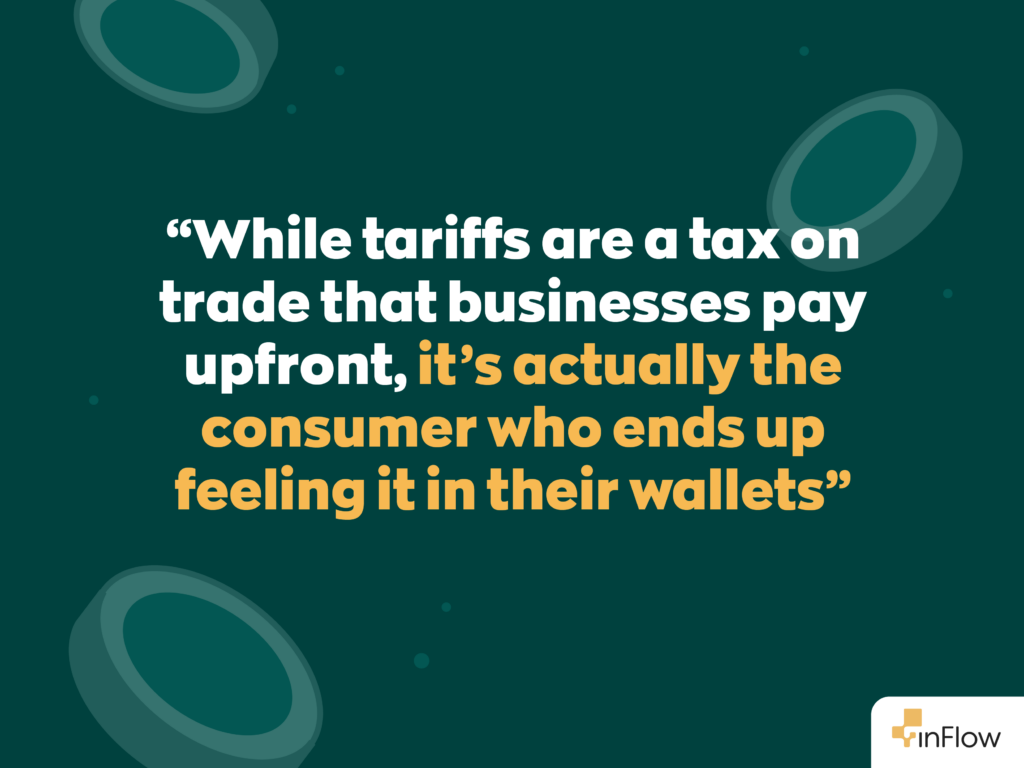
- While tariffs are imposed on businesses, the additional costs associated with them are typically passed down to the consumer through price hikes, making all imported goods more expensive.
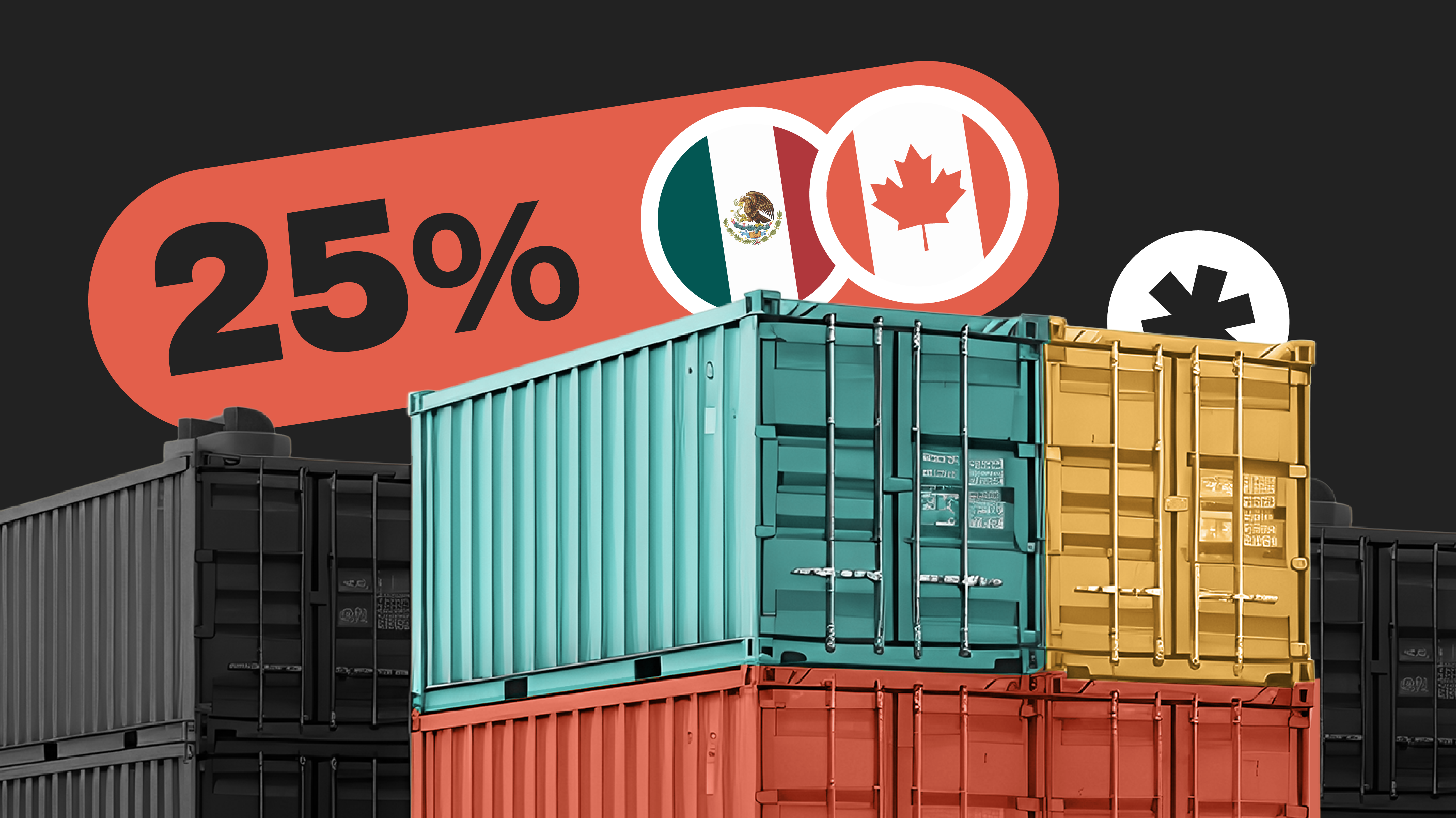
- The Trump Administration placed a 25% tariff on goods from Mexico and Canada (10% on energy) starting March 4, 2025, but a landmark Supreme Court ruling struck down the tariffs’ legal foundation in early 2026.
- Despite the Supreme Court ruling, tariffs haven’t disappeared; they’ve been replaced with other legal mechanisms, and the situation remains in flux as of mid-2026
- To mitigate the impacts of tariffs, companies should consider stockpiling inventory, reassessing supply chains, and exploring ways to reduce operating costs.
Politics is a tricky subject and one we tend to avoid around here. But regardless of your political beliefs, the trade landscape in North America has shifted dramatically over the past year after President Donald Trump signed an executive order on February 1, 2025, levying a 25% tariff on most goods from Mexico and Canada, with a lower 10% tariff on energy resources.
A lot has changed since then. Canada retaliated with its own tariffs, then partially walked them back. The U.S. escalated with additional duties on steel, aluminum, and other sectors. And in February 2026, the Supreme Court struck down the legal basis for the original tariffs entirely, only for the administration to replace them days later using a different law. If you’re trying to keep up, you’re not alone.
Today, we’ll go over how tariffs work, who pays tariffs, and what they mean for your business. So, if you’re looking to make sense of all this tariff back and forth, you’ve come to the right place.
What is a tariff?
A tariff is a tax imposed by a government on imported goods and services. Some tariffs are ad valorem (a percentage of the product’s value), while others are specific (a fixed fee per unit). Governments often impose these taxes on particular imports.
For example, President Trump’s 25% tariff on all steel and aluminum imports coming into the US. This means any country that sells steel or aluminum to the US will be subject to this 25% tax. In addition, tariffs can stack. For instance, the steel tariff would be on top of any other broad-based tariff rates currently in effect.
Watch this short clip from our podcast Secret Life of Inventory where BDC’s Director of Economic Research, Arnaud Franco breaks down tariffs.

How do tariffs work?
As mentioned above, tariffs are taxes on products imported from other countries. If your business operates in Canada and sends products to customers in the US, you would be subject to these trade tariffs. The revenue from these tariffs would go directly to the government to help fund infrastructure, military spending, etc.
Tariffs are usually valorem, a percentage of a product’s value, such as 25%. However, certain products may have a specific tariff (fixed price). Sometimes, a government implements exceptions to help protect certain businesses. For example, a tariff may have a loophole that excludes orders under a specific dollar amount.
What is the goal of a tariff?
Governments typically use tariffs to protect domestic industries by making foreign products more expensive. The idea behind this is that, in theory, tariffs encourage industries to purchase and manufacture products locally.
However, according to the White House, these new tariffs on Canada and Mexico are related to border security, particularly stopping the flow of illegal immigrants and fentanyl. It’s worth mentioning that many politically savvy individuals aren’t buying this reasoning. Instead, they believe the President is merely using this as an excuse to declare a state of emergency. A national security threat allows the sitting president to impose tariffs without direct congressional approval.
Trump has also called for Canada to become the 51st state to avoid these proposed tariffs, making these tariffs a form of economic warfare.
Who pays for tariffs?
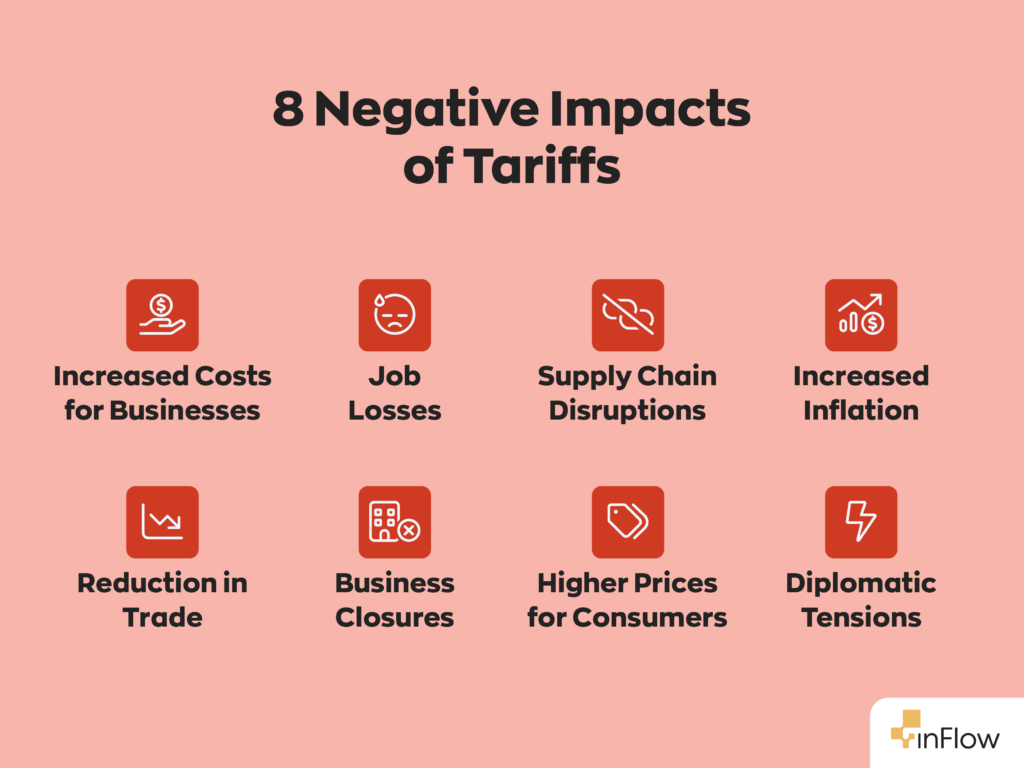
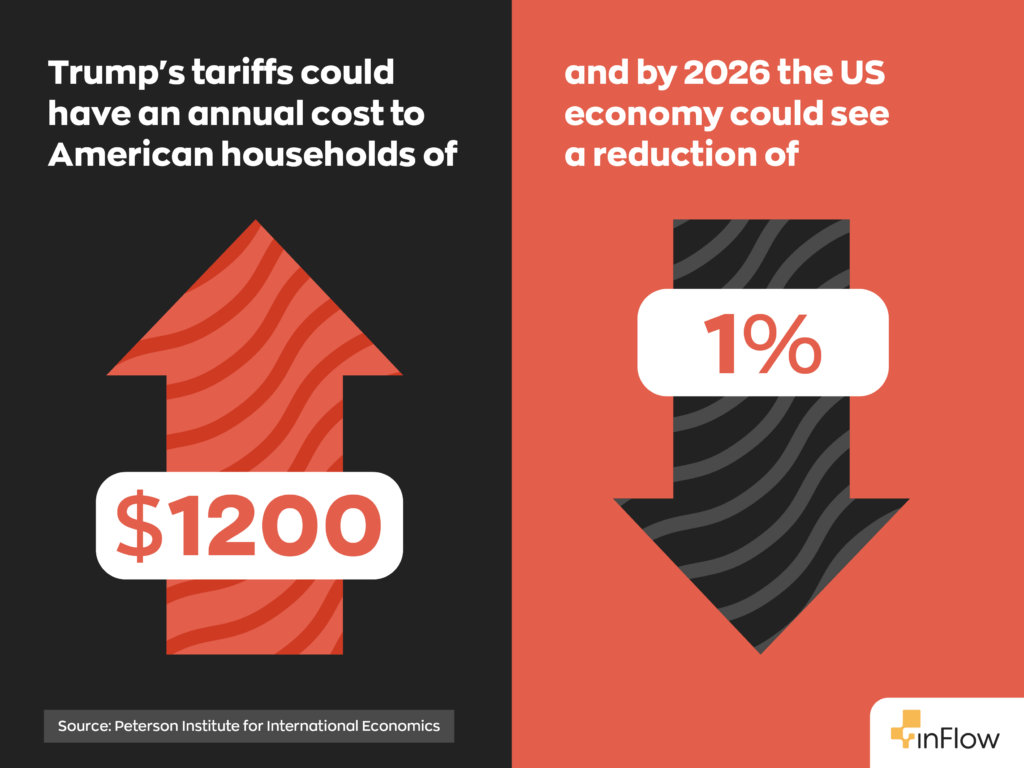
It’s a common misconception that businesses pay for tariffs. While this is technically true, the reality is a bit different. Businesses operate with razor-thin margins, and every expense is accounted for when pricing their products. Therefore, the cost of tariffs is passed onto the consumer through price increases. This essentially means all goods from foreign countries will increase in price equivalent to the value of the tariff.
So, for instance, if you live in the US and purchase a product from Canada that was once $1000, you’ll now be paying $1250. Depending on a business’s gross profit margin, it may be possible to absorb some of these expenses but not all.
This isn’t just theory anymore. Research from the New York Federal Reserve found that more than 90% of tariff costs were borne domestically during most of 2025, confirming what many businesses experienced firsthand.
On the surface, a price increase may seem good for businesses. After all, it means more revenue. However, they will undoubtedly experience a decrease in sales as their customers look for locally sourced alternatives.
In short, everyone pays for tariffs in one way or another. That’s just how tariffs work.
Do tariffs work?
The short answer is no, not really. We know this because this is not the first time the United States has done this to its closest trading ally. In the late 19th century, the McKinley Administration made a similar push to make Canada part of the U.S. Their weapon of choice? A tariff.
However, the result was far from what they desired. Rather than weakening Canada to the point of annexation, the tariff pushed them to do more business with Britain. The effects have persisted long into the modern day, considering Britain is the United States’ main economic rival.
Another unforeseen effect was that many US manufacturers moved to Canada to avoid the tariffs altogether.
At the time, Canadian Minister of Trade and Commerce Mackenzie Bowell said, “Our neighbors are cutting off their noses to spite us.”
What’s actually happened since March 2025?
The tariff situation has been a bit of a roller coaster ride, so if you’ve had a hard time keeping up, we don’t blame you. Here’s a quick recap of where things stand:
- Canada’s response — Canada initially hit back with 25% retaliatory tariffs on C$30 billion worth of U.S. goods. By August 2025, Prime Minister Mark Carney (who replaced Justin Trudeau in March 2025) announced Canada would drop those retaliatory tariffs on U.S. goods covered under the Canada-U.S.-Mexico Agreement (CUSMA), effective September 1. Sectoral tariffs on steel, aluminum, and autos remained in place.
- The Supreme Court ruling — In February 2026, the U.S. Supreme Court dealt a major blow to the Trump administration’s trade strategy. In a 6-3 decision, the Court ruled that the International Emergency Economic Powers Act (IEEPA), the law the White House used to impose the original tariffs, does not actually authorize the president to levy tariffs. All IEEPA-based tariffs terminated on February 24, 2026, and billions of dollars in refunds became potentially available to U.S. importers.
- The Trump administration pivots — Within hours of the ruling, the administration imposed a 10% tariff on nearly all countries under a different law (Section 122 of the Trade Act of 1974). Section 232 national security tariffs on steel and aluminum also remain, with rates that were doubled during 2025. Multiple new investigations are underway that could result in further tariffs down the road.
- “Forced labour” tariffs (June 2026) — Just as the Section 122 tariffs are approaching their expiry, a new wave is on the horizon. On June 3, 2026, the Trump administration announced plans to impose new tariffs on at least 60 countries, including Canada, alleging they’ve failed to prevent goods made with forced labour from entering U.S. supply chains. Canada would face an additional 10% tariff on all non-CUSMA-compliant goods. These tariffs could be more durable than the expiring Section 122 duties, but would still require public consultations and hearings before implementation, with those hearings scheduled for July 2026. Whether they ultimately take effect remains to be seen, but it’s yet another reminder that the trade uncertainty isn’t going away.
The bottom line: the rules keep changing, and the situation is unlikely to be fully resolved before the CUSMA treaty comes up for joint review in July 2026.
What other effects will tariffs have on businesses?
There’s no two ways about it: tariffs make things more complicated for businesses. Here are some effects that you’re likely to see.
Increased operating costs and prices
The increased costs caused by tariffs have a ripple effect throughout every industry. This is because tariffs affect not only the products themselves but also the raw materials. We mentioned that Trump plans to impose a 25% tariff on imported steel and aluminum. Both metals are crucial to the construction and manufacturing industries. So, even if a company manufactures its products in the US, it will likely source some of its materials from Canada or Mexico.
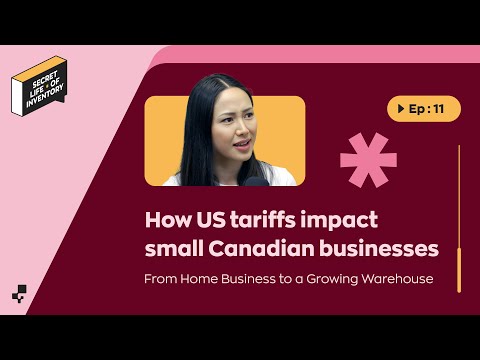
Check out this clip from our podcast, where we discuss tariffs and their impact on small businesses.
Supply chain disruptions
In the best of times, supply chains can run precariously, so it shouldn’t be surprising that tariffs threaten to break them. Previously robust supply lines may dry up, and many others may become completely unavailable.
Retaliation
Retaliation in this context means governments implementing retaliatory tariffs or legislation to get back at one another. A tit for tat, so to speak. Geopolitics can be messy; unfortunately, businesses get caught in the middle. When one government issues a tariff, other governments must respond in one way or another.
Reduction of imports
If importing goods to the US becomes less profitable, fewer companies will do it. That’s another basic tenant of business. If a business can make $2 selling in the US or $3 selling in Europe, they’re going to sell in Europe.
How can you prepare for tariffs?
Unfortunately, mitigating the effects of tariffs can prove challenging. Knowing how tariffs work doesn’t mean you can avoid them. It’s a federal-level mandate, after all. Still, there are some steps you can take to prepare. Here are some that we think you should consider:
- Stockpile ahead of time—Under normal circumstances, we wouldn’t advocate carrying excess inventory. However, desperate times call for desperate measures. Ordering as much as possible before tariffs take effect may be a smart move—at least for the short term.
- Assess supply lines—The upcoming tariffs will likely challenge supply lines worldwide, so it’s a good idea to check up on yours. Some may rely on US or Canadian infrastructure, and whether that will remain after the tariffs is a bit of a toss-up.
- Explore alternative sources—As the costs of certain vendors rise, it’s essential to check for alternatives. While some suppliers may increase their prices, others may stop servicing your area altogether.
- Reduce costs in other areas—A great way to mitigate the impact of tariffs is to cut costs wherever possible. One easy way to do this is to use software to streamline your processes. For example, if you implement inventory software, like inFlow, you can automate various tasks, saving time and money.
Learn more about how you can mitigate the impacts of tariffs in this short video.

Conclusion
The situation has evolved significantly since we first wrote this piece in early 2025, but the core truth hasn’t changed: when governments use tariffs as leverage, businesses and consumers are the ones who absorb the uncertainty. Keep an eye on the CUSMA review in July 2026 and any new Section 301 investigations — those are the next major milestones that could reshape trade costs for North American businesses.
0 Comments