 Fellow Canadians: All inFlow plans are available in Canadian dollars






Key takeaways
- Just-in-time (JIT) inventory management focuses on receiving or producing inventory only when it’s needed, minimizing the amount of stock held on hand.
- Successful JIT systems depend on accurate forecasting, careful production planning, reliable suppliers, and strong communication across the supply chain.
- The main benefits of JIT include lower carrying costs, improved cash flow, and reduced inventory waste because businesses avoid tying up money in excess stock.
- JIT also comes with risks, including supplier delays, stockouts, reduced access to bulk-purchase discounts, and higher costs from frequent deliveries and order processing.
- Recent disruptions such as the COVID-19 pandemic, natural disasters, transportation issues, and sustainability pressures have exposed vulnerabilities in highly lean JIT supply chains.
- Rather than abandoning JIT entirely, many businesses are adopting a hybrid approach that combines JIT efficiency with just-in-case (JIC) safety stock to improve resilience and manage uncertainty.
Just-in-time (JIT) is a form of inventory management commonly used in retail and manufacturing. The idea is to hold (or make) only the stock that you require immediately. Items arrive as you need them, just in time, rather than as bulk orders that must be held until they sell later.
To do this, a retailer might only place an order with a manufacturer when a customer buys from them, or a manufacturer may decide to only make products on demand. As JIT is a methodology rather than a system in itself, businesses decide what works best for them and implement models accordingly. For instance, forecasting for a very short period and ordering only the stock required.
Today, we’re delving into just-in-time inventory management: what it is and what the future holds. We also briefly talked about just-in-time inventory in our new podcast. You can watch the short clip below.
How does just-in-time management work in manufacturing?
In a JIT system, the arrival of raw materials is closely coordinated with the actual production process, ensuring that each component or product is produced or delivered exactly when it’s needed. For this to be done effectively, JIT requires a well-organized supply chain in which suppliers deliver smaller quantities of goods frequently, often on short notice.
Production schedules must be planned carefully to match the real-time needs of supplies and reduce the need for excessive storage. By operating with minimal buffers, JIT emphasizes the importance of efficiency and accurate timing, relying on consistent communication throughout the manufacturing process.
How does just-in-time management work in other industries?
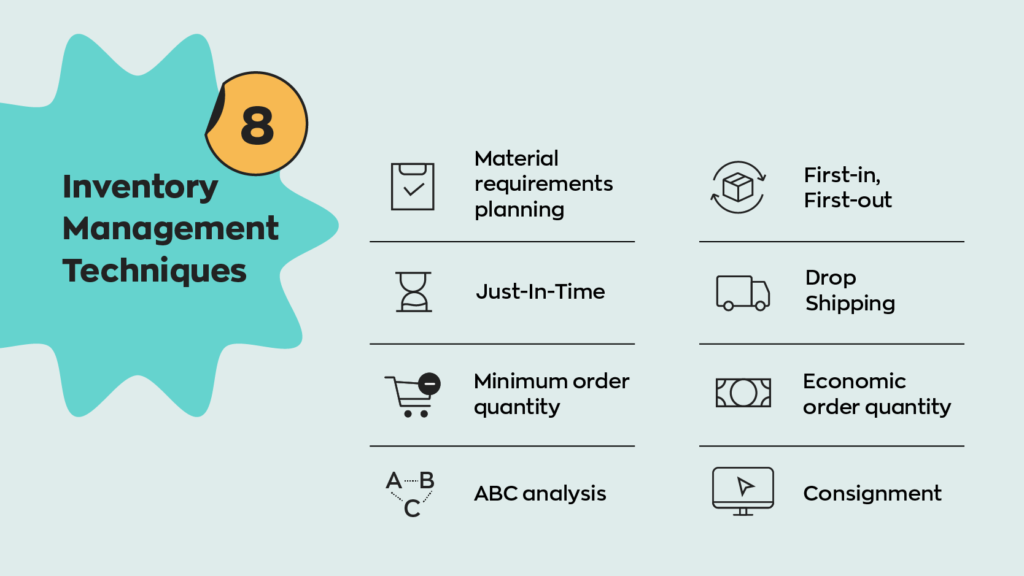
Although JIT is most commonly associated with manufacturing, the concept is used across many industries. Retailers use JIT to restock products based on customer demand, while restaurants rely on frequent ingredient deliveries to keep food fresh and reduce waste.
Construction companies schedule materials to arrive when crews are ready to use them, minimizing on-site storage and clutter. In healthcare, hospitals use JIT principles to manage medical supplies and pharmaceuticals efficiently.
Regardless of the industry, successful JIT systems depend on accurate demand forecasting, reliable suppliers, and careful coordination.
The advantages and disadvantages of just-in-time for inventory
Like any method, JIT inventory management has its pros and cons. Below, we’ve listed some of the main factors to consider when implementing this system.
Advantages of just-in-time inventory management
JIT can be effective when implemented correctly, and it’s important to understand the benefits:
- Lower carrying costs: As mentioned above, holding stock comes with costs. Some of these costs are evident, like the cost of the capital invested in the stock or paying for the space to store the items. But there are other factors to take into account as well, such as inventory shrinkage (for example, damaged goods). Using a JIT system usually means storing less stock, which can combat these expenses.
- Better cash flow: Pre-ordering large quantities of stock can cause cash flow issues for retailers. When money isn’t tied up in inventory, it can be invested in other areas or used to expand the current range of products.
- Less waste: Imagine you need to order hats for summer. If you order items based on quarterly forecasts, for example, your business may find itself with too much or too little stock at the end of the period, if that style of hat is no longer in fashion or the weather isn’t warm enough.
Ordering just what you need, when you need it, gives your business the chance to stay adaptable and reduce wastage.
Disadvantages of just-in-time management
JIT also presents some disadvantages. These include:
- Supplier delays: When ordering inventory, you depend on your supplier to deliver when they say they will. Delays could cause stockouts, especially if you’re ordering what you need just as you need it. Knowing where your products come from might help you create a more stable supply chain. However, only 2% of companies reportedly have visibility into their supply base beyond the second tier. This is something to bear in mind with JIT systems.
- Difficult to negotiate prices: The JIT inventory model doesn’t allow for buying in bulk, which might mean saying goodbye to much-loved discounts and hello to minimum order quantities. Whether or not this is an issue will depend on whether it’s truly more cost-effective to receive the discount and carry the excess inventory. In the case of unprecedented demand, businesses can also face difficulties negotiating better prices for last-minute orders. They also may not be able to wait for prices to drop again if they temporarily spike.
- Frequent deliveries cost: Ordering, receiving, and processing inventory costs money. Consider administration and delivery fees when deciding whether your JIT system is saving your business money, helping it stay adaptable, and reducing wastage.
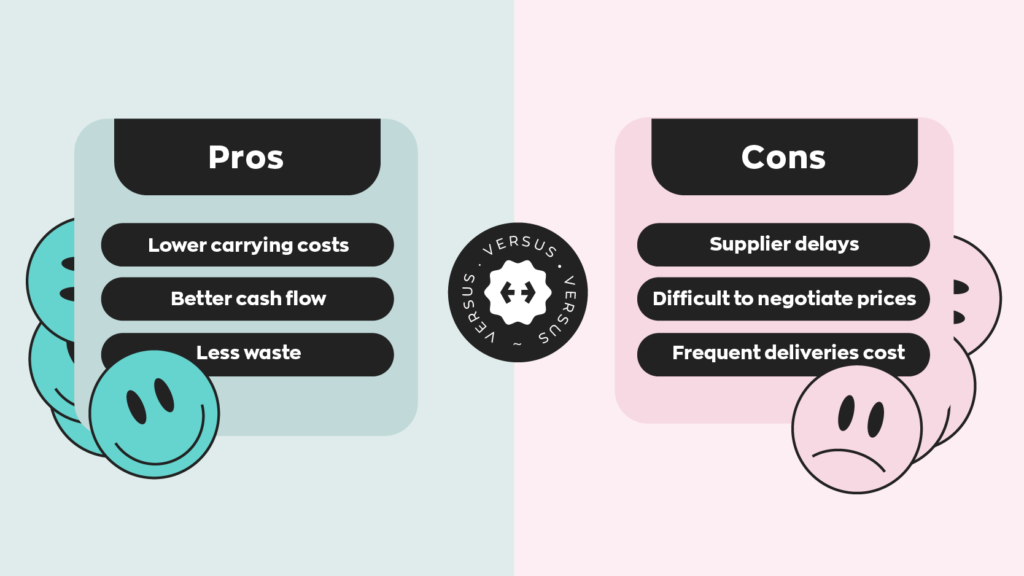
The above factors will affect some businesses more than others. For example, you may be more prone to experiencing delays if you’re using international suppliers, or more dependent on bulk-buy discounts if you sell fast-moving consumer goods. With this in mind, it’s important to evaluate what works for your business.
Is just-in-time inventory relevant today?
The last few years have shaken up supply chains around the world. We’ve seen how unpredictable shipments can be during disturbances. When one part of the chain experiences a setback, everyone is affected.
This isn’t just representative of the COVID-19 pandemic, either; we’ve seen natural disasters, transport issues, and the need to reduce carbon emissions impact supply chains. With this in mind, many companies have begun to question whether JIT is still the best methodology for them.
As Nissan CEO Ashwani Gupta explains (via World Economic Forum):
“The just-in-time model is designed for supply-chain efficiencies and economies of scale. The repercussions of an unprecedented crisis like COVID-19 highlight the fragility of our supply-chain model.” So, this might encourage businesses to consider other inventory options.
The just-in-case alternative
The just-in-case (JIC) model involves ordering extra safety stock so that there are always products on hand if needed. That way, if there’s an issue with a delivery or unprecedented demand, you have stock on hand for customers.
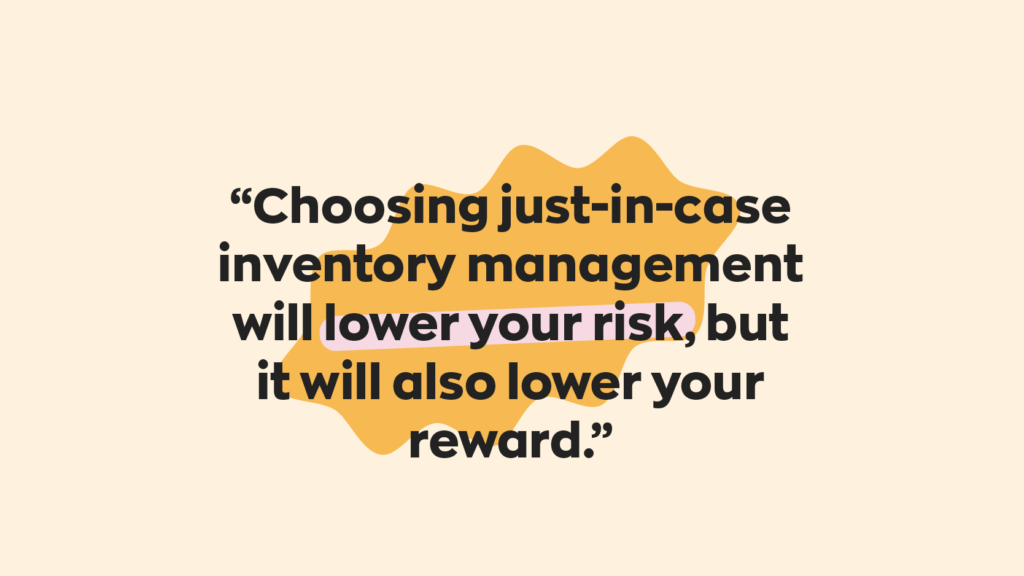
When it comes to JIC versus JIT systems, the key is determining what works for you. As PwC explains, businesses can even balance the two systems — taking a hybrid approach. For example, you might ensure you have a backup supply of inventory for high-value customers, whether that’s alternative options or safety stock.
The importance of having the right systems in place
Choosing the right inventory management method can make your business more efficient. That doesn’t stop at ordering the right items at the right time. Everything, from finding the best warehouse order picking method to implementing barcoding, is a part of analyzing what works best for your company, so you can save time and boost profits.
0 Comments