





Key takeaways
- A cost-plus contract reimburses contractors for project costs plus either a percentage or fixed fee, which they take as profit.
- This type of contract is favored by contractors because of the flexibility they offer. This makes them ideal for projects where the scope is unclear and subject to change.
- Cost-plus contracts reduce risk for contractors but can increase costs for clients if not managed properly.
- To maintain transparency, contractors should provide detailed documentation of costs to clients throughout the entire construction process.
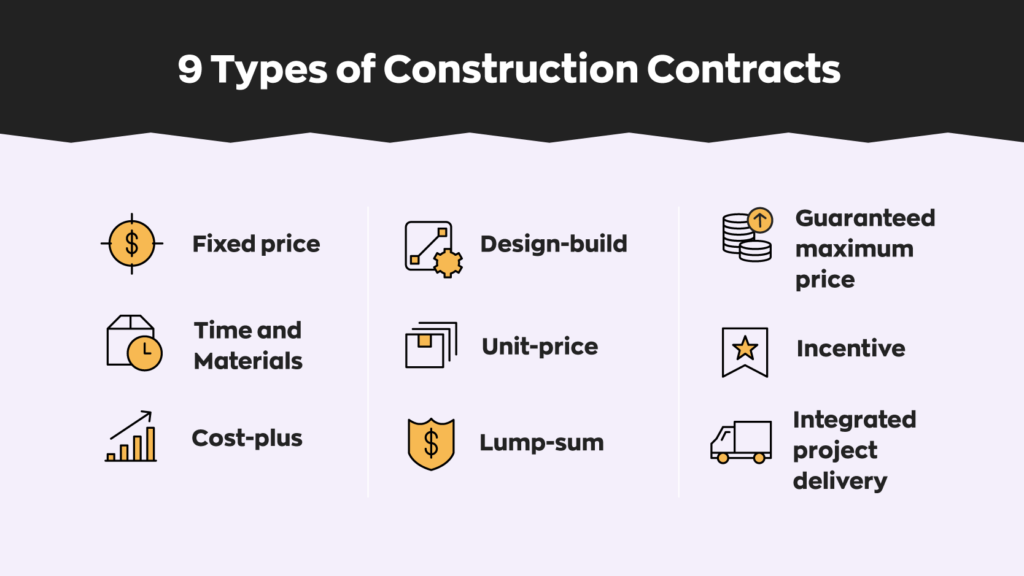
- There are different types of cost-plus contracts. The common variations include cost-plus fixed fee, cost-plus percentage, and cost-plus with guaranteed maximum price (GMP).
- These contracts are best suited for projects with trust between parties and where collaboration is prioritized over strict cost limits.
Signatures have power– especially in the eyes of the law– meaning contracts also have power. And given their title, it should be no surprise that contractors (especially construction contractors) use many different types of contracts. The cost-plus contract is on that long list of construction contracts, or as it’s called in the industry, a cost-plus construction contract.
So: what is a cost-plus contract? What sort of agreement does it signify? When should you use a cost-plus construction contract? What are the upsides? What about the downsides?
Read on to better understand where the cost-plus contract fits in with the various types of contracts out there.
What is a cost-plus construction contract?
A cost-plus construction contract is a pricing model in which the owner pays the contractor for the cost of the work plus a fee. Unlike fixed-price contracts, total costs aren’t locked in upfront, so they can change as the project progresses.
How the pricing model works
Under a cost-plus contract, the owner agrees to cover the project’s actual expenses as they occur. That typically includes the cost of materials, labor, equipment, and other direct project expenses.
In addition to those expenses, the contractor earns a fee, often structured as a contractor markup that covers overhead and profit. This can be structured in a few different ways, depending on the agreement:
- A fixed fee
- A percentage of total costs
- Performance-based incentives
Which avenue you take for the fee really depends on the contractor and the project in question. For instance, a fixed fee is generally used for projects with a defined scope, while a percentage-based fee might work better where administrative simplicity matters more than cost control.
Cost of the work vs contractor fee
Cost-plus contracts split pricing into two clear buckets:
- Cost of the work: All approved project expenses, like materials, subcontractors, labor, permits, and equipment
- Contractor fee: This covers the contractor’s profit and business overhead.
This separation makes things more transparent, but it also means you need clear definitions of what counts as billable costs; otherwise, disputes can creep in quickly.
Cost-plus vs fixed-price contracts
So how does this compare to a fixed-price contract? It really comes down to risk. In a cost-plus contract, the client assumes more risk because the final price depends on actual costs. In a fixed-price contract, the contractor assumes greater risk becasue the are agreeing to complete the project for a set price. If the project comes in over budget, they’ll need to eat those costs.
Cost-plus contracts tend to make the most sense when there’s uncertainty, whether that’s scope, design, or material costs. Fixed-price contracts, on the other hand, work best when everything is clearly defined and predictable.
When a cost-plus contract makes sense
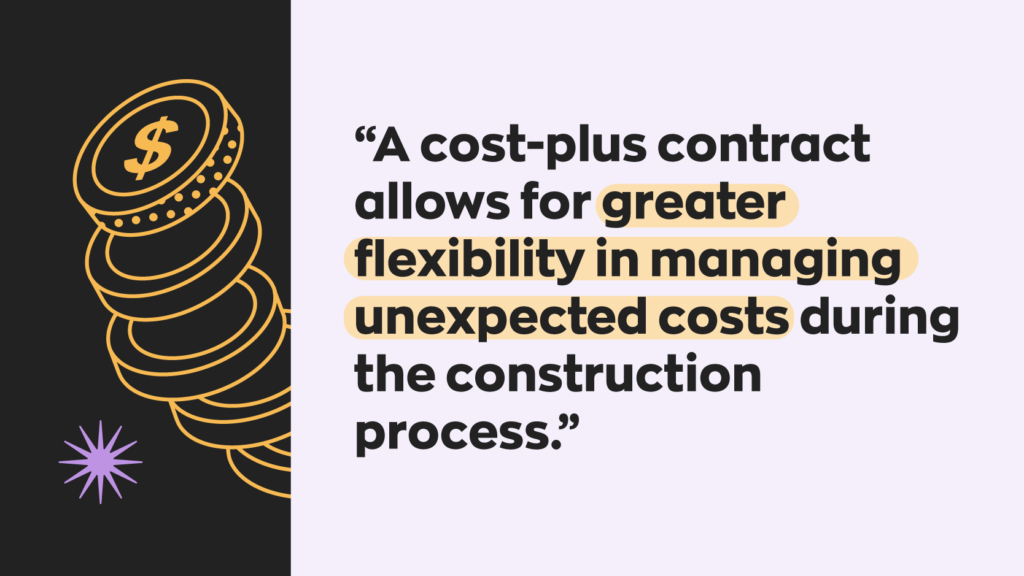
A cost-plus contract is best used when project costs are difficult to predict, and both the owner and contractor need flexibility as the job evolves, although some owners pair that flexibility with a maximum cost clause (more on that later). Instead of locking in a fixed price upfront, this model allows costs to fluctuate over time as scope changes, ensuring the contractor is fairly compensated.
Which projects are a good fit for a cost-plus construction contract?
Cost-plus contracts work well when uncertainty, complexity, or speed make fixed pricing unrealistic. Some examples of this could be:
- Unclear or evolving scope: Early-stage designs, renovations, or custom builds where requirements may change.
- Volatile material or labor costs: Markets where prices fluctuate significantly over time, making it difficult to estimate construction costs accurately.
- Complex or long-duration projects: Projects where unexpected issues (e.g., structural problems, site conditions) are likely.
- Specialized or contractor-driven procurement: When contractors leverage supplier relationships to source materials efficiently.
- Collaborative owner–contractor relationships: Environments with high trust and transparency, where open-book cost tracking is feasible.
Cost-plus construction contracts protect contractors from absorbing unpredictable costs while allowing owners to fast-track construction without waiting for precise quotes or estimates.
Which projects are a bad fit for a cost-plus construction contract?
Cost-plus contracts are not ideal when project costs are certain and strict budget control is top priority. For example:
- Fixed or limited budgets: When the owner cannot tolerate cost fluctuations.
- Well-defined scope and stable pricing: Projects where costs can be estimated accurately upfront.
- Low trust or limited oversight: Situations where cost tracking and transparency may be called into question.
- Minimal administrative capacity: Cost-plus requires detailed documentation, approvals, and ongoing monitoring.
- Incentive misalignment risks: Especially with percentage-based fees, where higher costs can increase contractor profit.
Without strong controls, costs can escalate, and disputes may arise over what qualifies as reimbursable expenses. The point of a cost-plus contract is to protect a contractor from losing money on a project, but if your client disputes charges, they could end up losing money on a job.
Different types of cost-plus contracts
Not all cost-plus contracts are the same. Broadly speaking, there are four different types, each with its own set of guidelines.
Cost-plus fixed fee (CPFF) contracts
These contracts state that contractors will receive reimbursement for materials used, along with a predetermined, fixed fee. This fee is agreed upon before the project begins and does not change, regardless of whether actual costs increase or decrease. Both direct and indirect costs are typically covered, provided they fall within the agreed definition of reimbursable expenses.
Cost-plus fixed incentive fee (CPIF) contracts
Cost-plus fixed incentive fee (CPIF) contracts combine cost reimbursement with performance-based incentives. In addition to a base fee, contractors can earn extra compensation by meeting specific targets, such as completing the project under budget or ahead of schedule. These incentives are usually defined by a formula agreed upon in advance, which outlines how savings or performance improvements are shared between the owner and contractor.
Cost-plus award fee (CPAF) contracts
This next type of cost-plus contract provides additional compensation based on the contractor’s overall performance, often evaluated subjectively. Beyond reimbursed costs and a base fee, contractors may receive an award fee tied to factors such as the quality of their work or the timeline. The criteria and evaluation process are typically defined at the outset, but the project owner or a review panel determines the final award.
Cost-plus percentage of cost (CPPC) contracts
Cost-plus percentage of cost (CPPC) contracts stipulate that the contractor receives a percentage of the total project costs as profit. Before the project begins, both parties agree on what qualifies as reimbursable costs and the percentage that will be applied. This model is somewhat controversial because it creates a direct link between spending and profit, which can incentivize higher job costing.
Advantages, drawbacks, and controls
As with anything, cost-plus construction contracts have their benefits and drawbacks. Understanding both sides and how to manage them is critical to making these contracts work.
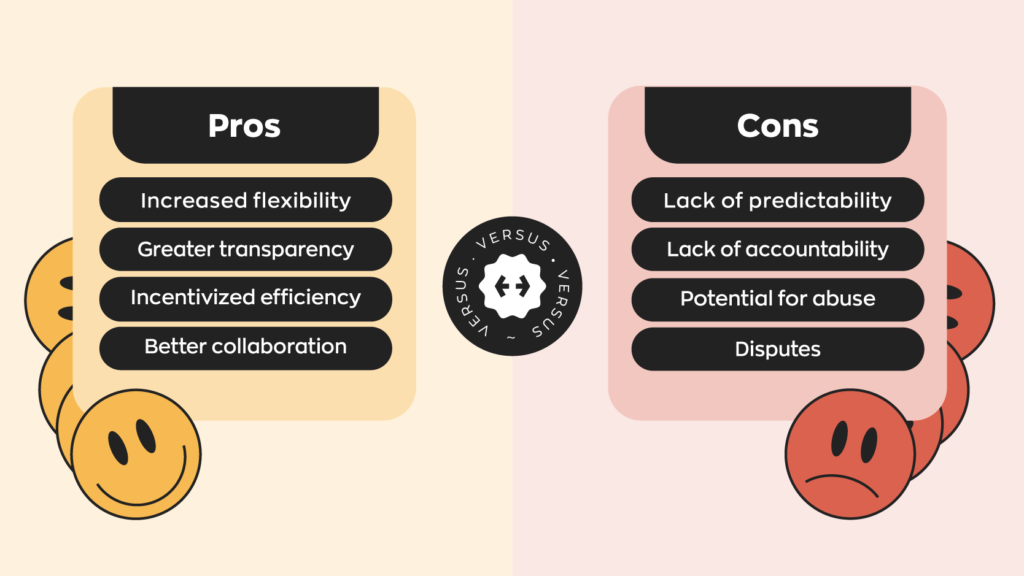
Main advantages of cost-plus construction contracts
While the benefits may change depending on the project, cost-plus contracts generally boil down to a few things:
- Eliminate risk: It’s no surprise to anyone that construction projects are expensive, and many of those upfront costs fall on the contractor. A cost reimbursement contract is a great way to give the contractor peace of mind, knowing they’ll be reimbursed for those expenses and still get paid for their time.
- Quality of work: A cost-plus construction contract removes the headache of cost from the equation, allowing contractors to focus on quality. If the paycheck depends on how much contractors spend during the process, it can lead to a lot of corner-cutting. And the reality is, when it comes to construction, cutting corners can have fatal ramifications.
- Clear communication: Lastly, such contracts are a great way to clarify each party’s responsibilities. That way, when it comes time to pay the bill, there are no surprises. This helps free workers from the mental load of fretting over budgets, so they can do their best work.
Main disadvantages of cost-plus construction contracts
On the other hand, the drawbacks of a cost reimbursement contract are a bit more abstract. If you’re working on a cost-plus contract of your own, here are some things to be mindful of:
- Cost uncertainty: The final price isn’t fixed, making budgeting more difficult and increasing the risk of overruns. This can be a real challenge for owners who need to secure financing or stay within strict budget limits, since costs can shift as the job progresses.
- Difference of opinions: Construction projects can have a wide range of pricing depending on which materials you use and where you source them. Clients might disagree with contractors on what a “fair cost” is for a specific material. That difference in opinion can be trouble. In some instances, it can lead to a long legal battle. Because of this, it’s a good idea to communicate throughout the project to ensure everyone is on the same page.
- Undefined timelines: A project timeline is a significant element that is often overlooked in a cost-plus construction contract. Because a cost-plus contract guarantees a certain amount of profit, there is really no incentive for contractors to finish the project promptly. That being said, time is money. So if you’ve agreed to do a particular job for a fixed price, it’s in your best interest to finish sooner rather than later.
Key clauses to define before signing
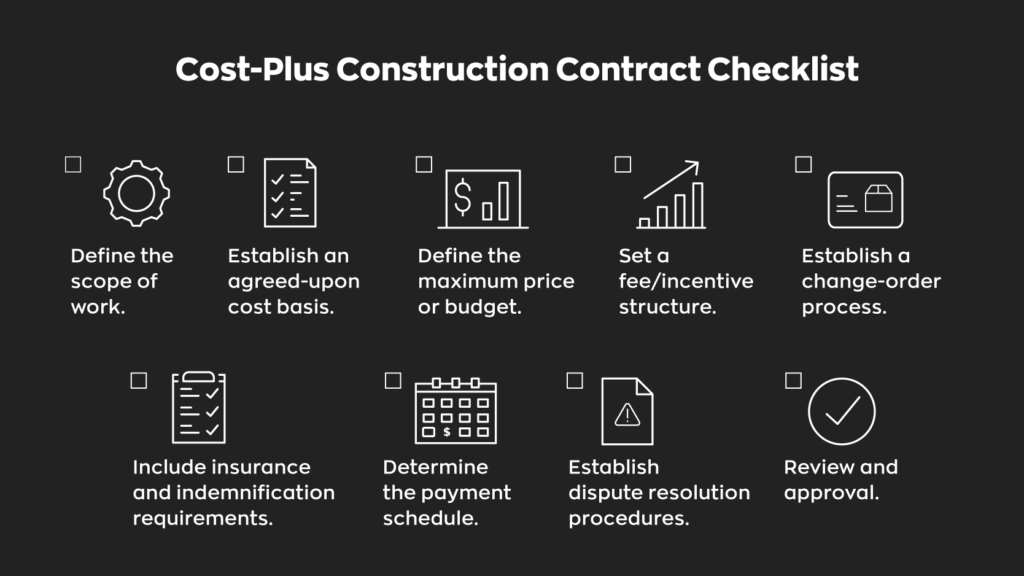
Cost-plus contracts only work with transparency from both parties, which is why many teams effectively run them as an open-book contract. If the terms aren’t clearly defined upfront, things can get messy fast.
Before signing, both parties should align on how costs are tracked, approved, and paid. Strong documentation here helps prevent disputes, control spending, and keep the job running smoothly.
Scope, assumptions, and allowable costs
Since costs are reimbursed as they occur, both sides need to agree on what’s included and the assumptions underlying the costs. Otherwise, you’re opening the door to confusion later on. A big part of this is defining allowable costs. In other words, what actually qualifies for reimbursement
This typically includes things like labor, materials, subcontractors, equipment, permits, and any agreed construction allowances for items that have not yet been fully specified. But the details matter. Without clear guidelines, it’s easy for disagreements to pop up.
Outline inclusions and exclusions in detail, define how indirect costs like supervision and admin are handled, and set clear rules for substitutions or upgrades so everyone is aligned on what’s covered and how changes are managed.
Fee structure, guaranteed maximum price (GMP), and payment schedule
Next, you’ll want to lock in the fee structure. That means clearly defining how payment is handled beyond the base costs, for instance, you could go with a fixed fee, a percentage of total costs, or an incentive-based model.
If you want greater cost certainty, a guaranteed maximum price (GMP) contract can help. It sets a ceiling on total costs, which helps limit risk while still allowing some flexibility.
Then there’s the payment schedule. Make sure you define how often invoices are submitted, what documentation is required, when payments are due, and how any payment disputes will be handled so expectations are clear on both sides. Clear payment terms keep cash flowing for the contractor and give the owner full visibility into spending.
Clear schedules, order changes, insurance, and dispute resolution
Finally, you need to outline how the job will be managed day to day. Start with the schedule. A defined timeline sets expectations and keeps things moving. Without it, there’s less accountability to stay on track.
You’ll also want a clear process for requesting and approving changes to scope, cost, or timeline. This ensures nothing gets added without both sides agreeing first.
From there, make sure insurance requirements are spelled out. That includes coverage for liability, property damage, and worker protection.
And last but not least, define how disputes will be handled. Whether it’s mediation, arbitration, or legal action, having a process in place up front can save you a lot of time, money, and stress down the line.
Bottom line
A cost-plus construction contract is perfect when flexibility matters more than price certainty. It works best for complex or evolving projects where scope, materials, or timelines can’t be accurately defined upfront.
However, that flexibility comes with tradeoffs. Without clear cost definitions, strong oversight, and aligned incentives, expenses can quickly escalate into disputes.
How can inFlow help?
A cost reimbursement contract can be very beneficial but requires a lot of know-how. Not just to make the contract but to enforce it as well. To justify reimbursement, you’ll have to keep track of what you buy when you buy it, why you bought it, and how much you paid for it at the time.
That’s a lot of information, and you’re also dealing with a lot of materials. Keeping track of everything can be tricky!
This is where inFlow steps in, making job cost tracking and reimbursement documentation easier on cost-plus projects. Our field management software focuses on inventory management, giving you a unique advantage when forecasting future projects. You can keep track of the materials you have and what you paid for them, and inFlow even allows you to set updifferent costing methods. Did we mention we also have a built-in barcoding system?
In short, inFlow keeps track of any materials you use for any project and will enable you to craft more accurate future construction contracts. So no matter what types of contracts you use, inFlow can help.
0 Comments