 Fellow Canadians: All inFlow plans are available in Canadian dollars





Key takeaways
- Bonded inventory lets importers defer tariff and duty fees by storing goods in customs-controlled facilities until they’re ready for sale or re-export.
- This approach improves cash flow, especially for seasonal or high-volume importers, and enables cost savings through bulk purchasing.
- Bonded storage protects businesses against rising tariffs and offers flexibility to release goods domestically or export them based on market conditions.
- Key challenges include strict customs compliance, higher warehouse and administrative costs, limited facility availability, and time limits on bonded storage.
- Bonded inventory is ideal for SMBs that import frequently, handle high-value goods, or need distribution flexibility.
- Success with bonded inventory depends on strong inventory tracking, meticulous documentation, proactive duty-payment management, and regular compliance reviews.
Running a small business that imports goods internationally? Then you’ve probably felt the sting of new tariffs and customs fees hitting your margins the moment your products cross the border. It’s one of those unavoidable costs of doing business internationally. The good news is, there are tools to get a handle on those costs, and one of the most effective is bonded inventory.
Bonded inventory is essentially a way to hit the “pause” button on tariffs and customs duties. Instead of paying these costs upfront when your goods arrive, you can store them in a special customs-controlled facility and defer those payments until you’re ready to sell or distribute the products.
Of course, like most things in international trade, bonded inventory comes with its own set of rules, benefits, and challenges. Let’s dive into everything you need to know to determine if this strategy makes sense for your business.
What is bonded inventory?
Think of bonded inventory as goods that are physically in their destination country but haven’t technically “entered” it from a customs perspective. Customs-controlled facilities store these products under government supervision until the owner decides to release them into the domestic market or export them elsewhere.
The key here is that while you maintain ownership of your products, they exist in a sort of customs limbo. You haven’t paid the duties, taxes, or tariffs yet, but you also can’t sell them domestically until you do.
How bonded stock works
The process begins when your imported goods arrive at a port of entry or border crossing. Instead of immediately clearing customs and paying all associated tariffs and customs fees, you have the option to move these products to a bonded warehouse.
Here’s how it typically works:
- Your goods arrive and undergo an inspection by customs authorities.
- Instead of clearing customs immediately, the importer transfers the products to a bonded warehouse.
- Customs authorities maintain oversight and may audit records, while the warehouse operator and importer manage documentation.
- Inside the bonded facility, you can store, sort, repackage, or even perform certain light manufacturing, depending on the country’s regulations.
- When you’re ready, you can release the goods into the domestic market, at which point you would pay all applicable tariffs and customs duties. Alternatively, you can also export them directly from the bonded warehouse without paying any duties.
The role of customs authorities
Customs authorities aren’t just passive observers in this process. They play an active supervisory role and ensure that all goods entering bonded storage are properly documented and that duties are collected (eventually).
This oversight includes regular audits of bonded facilities, verification of inventory records, and enforcement of compliance requirements. While this seems restrictive, it creates a framework that protects both businesses and governments, ensuring a smooth flow of trade while maintaining proper revenue collection for governments.
Key benefits of bonded inventory
Bonded inventory offers several advantages that can significantly improve how small and medium-sized businesses do business. Here are some of the most significant ones.
Deferred duty and tax payments
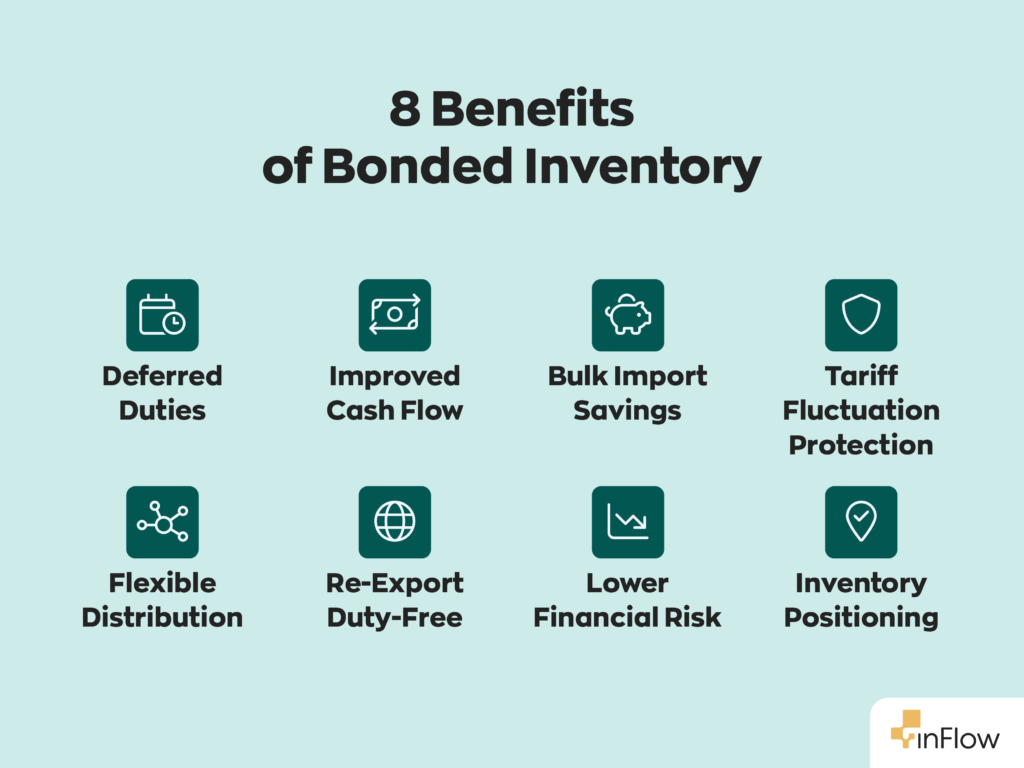
The most obvious benefit of bonded stock is improved cash flow. Instead of tying up capital in duty payments for products that might sit in your warehouse for months, you divert those expenses into other areas of your business operations. For example, you could launch a new marketing campaign, purchase new product offerings, or expand your business into new markets.
Bonded inventory is particularly valuable for seasonal businesses. Imagine you’re importing holiday decorations in August, but won’t start selling them until October or November. With bonded inventory, you can defer those duty payments until you actually start making sales.
Cost savings from bulk imports
Bonded inventory makes bulk imports much more affordable. You can take advantage of volume discounts from suppliers without the immediate cash flow hit of the landed costs on your entire shipment upfront.
Let’s say you usually import $50,000 worth of products monthly, paying $7,500 in duties each time. With bonded inventory, you could import $150,000 worth of products (getting better pricing through volume) and pay duties only as you release products to market over time.
Protection against fluctuating tariffs
In today’s volatile trade environment, tariffs are constantly shifting. There’s no guarantee that the rate today will be the same as tomorrow. Bonded inventory provides a buffer against these fluctuations. If tariffs increase after your goods are in bonded storage, you’re protected from the higher rates as long as your products remain in bonded status.
From there, it’s just a matter of waiting until the tariff rates become more favorable before you decide to release your bonded inventory into the market.
Enhanced distribution flexibility
Bonded distribution centers let you position inventory closer to your customers without making a full commitment to specific markets right away. You can store products in a bonded facility and later decide whether to release them domestically or export them to other countries, based on market conditions and demand.
This flexibility is invaluable if you’re testing new markets or dealing with unpredictable sales patterns, which make demand forecasting more challenging.
Main challenges with bonded inventory
While bonded inventory can offer meaningful financial and operational advantages, it also comes with challenges that businesses should fully recognize. We’ve rounded up the main ones below.
Compliance with customs regulations
The biggest challenge with bonded inventory is maintaining strict compliance with customs regulations. Documentation requirements are extensive, and any errors can result in penalties, delays, or even seizure of goods.
You’ll need to maintain detailed records of all inventory movements, ensure proper classification of goods, and meet specific reporting deadlines. The complexity of these requirements can be overwhelming for many businesses, so consider contacting a professional trade consultant for guidance.
High operational costs
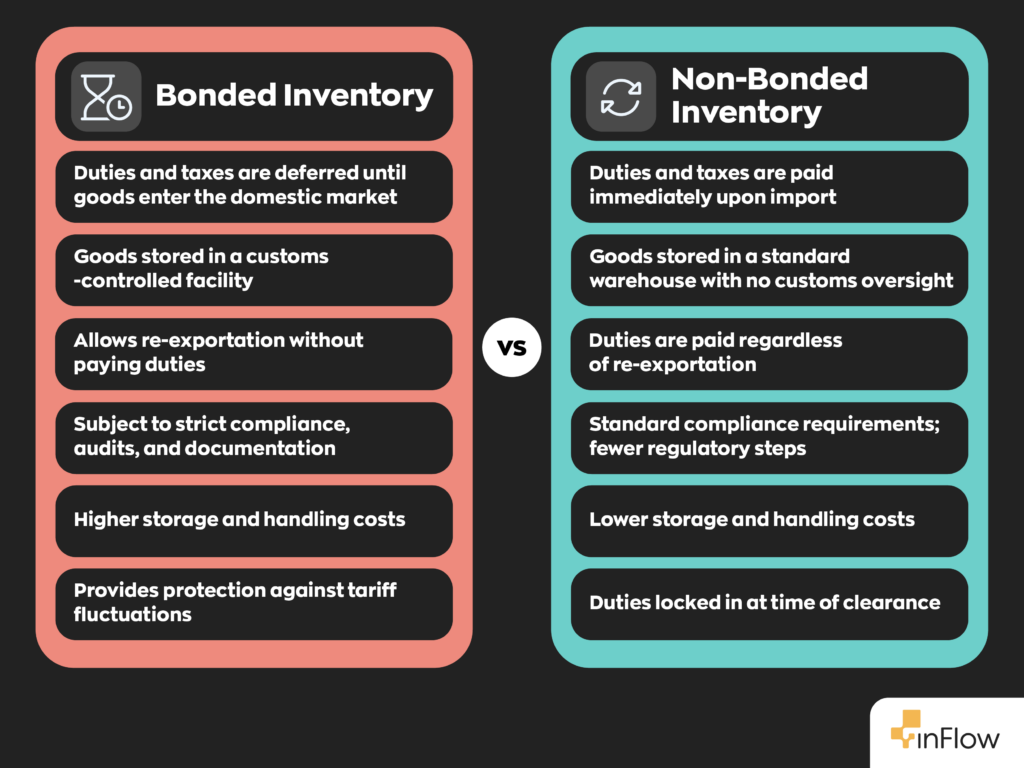
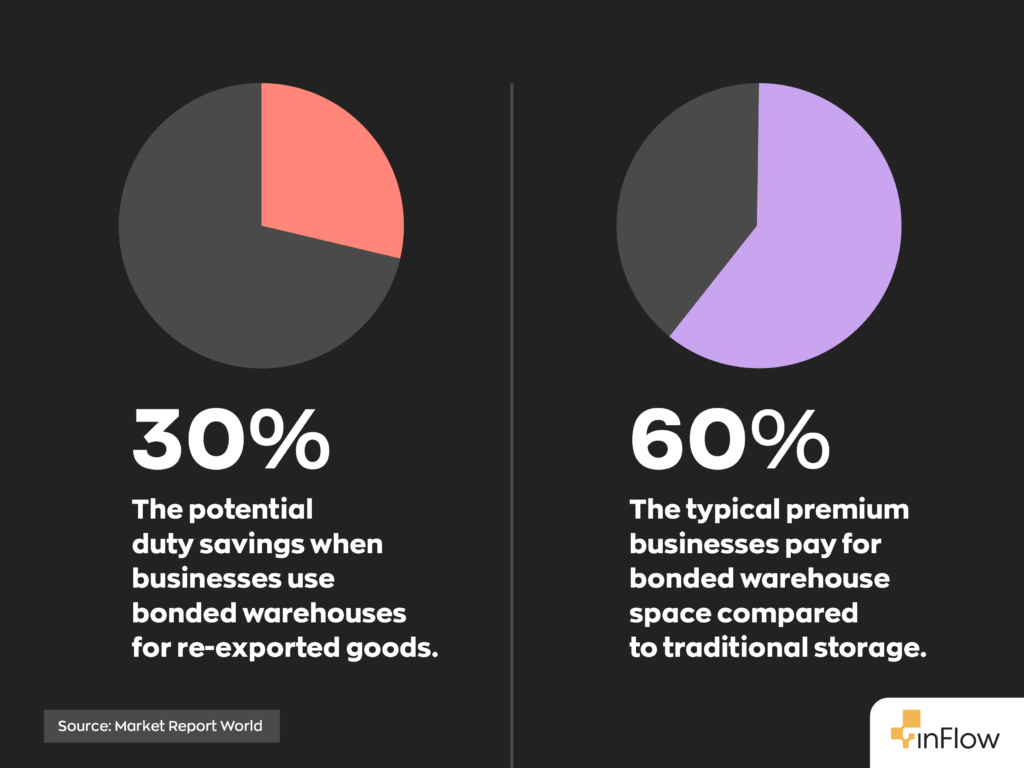
While bonded inventory can save you money on tariffs and customs fees, it often comes with higher storage and handling costs. Due to the specialized nature of bonded warehouses, they typically charge premium rates compared to regular warehouses.
You’ll also need to factor in additional administrative costs for customs documentation, potential consulting fees, and the time investment required to manage these more complex operations.
Limited facility availability
Bonded warehouses aren’t available everywhere. Depending on your location and the markets you serve, you may have limited bonded storage options, which could affect your distribution management.
In some cases, bonded stock is entirely out of the question. In these instances, consider switching to a supplier from a country with more favorable duty rates.
Time limitations and penalties
Most countries impose time limits on how long goods can remain in bonded status. They typically range from one to five years. If you don’t release or export your products within these timeframes, you may face penalties or experience forced duty payments.
Missing payment deadlines or failing to meet documentation requirements can result in significant financial penalties that quickly erode any benefits you’ve gained from the bonded inventory.
Is bonded inventory right for you?
Before diving into bonded stock, you should assess your business needs. Take a hard look at your import patterns, cash flow cycles, and distribution requirements. Bonded inventory is best for businesses that import regularly, handle high-value goods, or need flexibility in their distribution.
Consider these questions:
- Do you import products seasonally or in large batches?
- Are your duty payments straining your cash flow?
- Do you need flexibility in deciding which markets to serve?
- Are you dealing with products subject to fluctuating tariffs?
- Is it difficult to source your products from a supplier in a country with lower duty fees?
If you answered yes to several of these, bonded inventory might be worth exploring.
Getting started with bonded stock
Success with bonded inventory depends heavily on working with experienced partners. Look for bonded warehouse operators with strong track records, proper certifications, and industry experience.
You’ll also want to establish relationships with customs brokers who understand bonded inventory procedures and can help you navigate the compliance requirements. The risks are too high to try to handle the complex documentation and regulatory requirements on your own.
Next, be sure you understand the regulatory framework around bonded stock in your region. Each country has its own rules and requirements for bonded inventory. Invest time in understanding the specific regulations that apply to your situation, including time limits, documentation requirements, and penalty structures.
Best practices for managing bonded inventory
Bonded inventory comes with many moving parts, but there are best practices you can follow to ensure you get the most from your efforts.
- Implement robust inventory tracking – Inventory accuracy is absolutely critical for businesses that use bonded inventory. Invest in inventory management software that can handle the specific requirements of bonded stock, including lot tracking, customs status monitoring, and automated reporting capabilities.
- Set timelines for duty payments – Develop a systematic approach to managing duty payment timelines. Create alerts and reminders well in advance of deadlines to ensure you never miss a payment window.
- Maintain detailed documentation – Keep meticulous records of all bonded inventory transactions, including import documents, storage agreements, movement records, and duty payments. Organize these documents in a way that makes them easily accessible for customs audits or internal reviews.
- Regular compliance reviews – Schedule regular reviews of your bonded inventory operations to ensure ongoing compliance. This includes verifying that your warehouse partners maintain their certifications and checking that your documentation procedures are up to date.
Conclusion
Bonded inventory is a powerful tool for SMBs navigating the complex trade environment. When implemented correctly, it can provide improved cash flow, cost savings, and operational flexibility that gives smaller businesses a competitive edge in global markets.
The key is approaching bonded stock strategically, understanding both the benefits and challenges before committing to this more complex approach to inventory management. Success requires careful planning, strong partnerships, and meticulous attention to compliance requirements.
FAQ
What is bonded inventory?
Bonded inventory refers to imported goods stored in a customs-controlled facility known as a bonded warehouse. These facilities allow businesses to defer tariffs and duties until the products are released into the domestic market. While these goods are physically present in the destination country, they haven’t officially “entered” it from a customs standpoint.
What is a bonded warehouse and how does it work?
A bonded warehouse is a government-supervised storage facility where imported goods can be held without paying duties upfront. When your shipment arrives, instead of clearing customs immediately, you transfer the goods to a bonded facility. You can store, sort, or repackage them there. When you’re ready to sell, you pay the applicable duties and release the goods, or export them duty-free.
What are the benefits of bonded inventory?
The biggest benefit is improved cash flow since you defer duty payments until you’re actually ready to sell. Beyond that, bonded inventory allows you to buy in bulk at better supplier pricing, protect against tariff increases, and give you flexibility to either release goods domestically or re-export them without paying duties at all.
What is the difference between bonded and regular freight or warehousing?
With regular warehousing, duties and tariffs are paid immediately when goods clear customs at the point of entry. Bonded warehousing delays that payment until you choose to release the goods. Regular storage is simpler and cheaper to operate, but bonded storage offers greater financial flexibility and protection against tariff fluctuations, at the cost of stricter compliance requirements and higher facility fees.
What is an in-bond shipment?
An in-bond shipment is cargo that moves through a country under customs supervision without the duties being paid upfront. The goods travel from the port of entry to a bonded warehouse (or another customs-approved destination) while remaining under a customs bond. This is the mechanism that makes bonded inventory possible.
What is a customs bond, and do I need one for bonded inventory?
A customs bond is a financial guarantee. It’s essentially a contract between an importer, a surety company, and customs authorities that ensures duties and fees will eventually be paid. Yes, you’ll need one to use bonded inventory. A continuous bond covers all your shipments over a 12-month period, while a single-entry bond covers just one shipment. Most regular importers opt for a continuous bond since it’s more cost-effective over time.
What is the role of bonded warehouses in international trade?
Bonded warehouses are a critical piece of global supply chain infrastructure. They allow businesses to position inventory strategically across markets without committing to upfront duty payments, making it easier to test new markets, manage seasonal demand, and respond to shifting tariff environments. For SMBs competing internationally, bonded warehousing can level the playing field by reducing the cash flow burden that typically favors larger importers.
0 Comments